
Life on an Island: Hurricanes and PTSD
I understand now why people have hurricane parties...
I understand now why people have hurricane parties...
The Aftermath
The whine of pressure washers amidst the buzzing chainsaws ramped up the pressure in my head. A slight wave of nausea and the bright edges of color signaled an oncoming migraine. Swimming pool workers lounged at the edge of my neighbor’s recent blue-water addition, a pool large enough for a resort hotel. Shaking their heads at the now slimy sandy mess, the supervisor began calling out instructions, cigarette in one hand, the other resting on the top of a shovel handle.
Yesterday, Caribbean-colored tiles glinted in the sun next to the luscious green of their newly planted backyard grass. Today, the pool was a pluff, mud-colored swamp sporting whitecaps from the wind's leftover twisting. I thanked whoever was in the clouds above me that it wasn’t my mess. I’d learned my lesson two houses ago, when frogs used the shrimp-smelling mess as their swimming hole. Dead fish will float up tomorrow, I knew, and so would the workers.
Just another day in the land of the hurricanes.
The owners stayed hidden in their comfortable primary manse a day’s drive away, and I couldn’t blame them. From my front porch, I watched as landscapers and carpenters joined the pool workers. They joked with each other, the baseball-capped locals ribbing the men with voices clearly from Texas, both groups happy for the work. I counted them and estimated the cost, laughed at the ridiculous total, and secretly wished I could steal those workers for myself on someone else’s dime.
I still had two feet of heavy wet sand inside my garage.
The island is still a hurricane-sized war zone after five days of power washing, raking, garbage hauls, and the never-ending hammering. Garbage trucks have made only a minuscule dent in the mounds of ruined belongings and yard trash piled high block after block. The sand topped with old foam and marsh reeds sits in dunes in the middle of the street, dumped there by the raging two-hour surge that took forever to recede. My neighbor to the west, after two days with ditch witches and front-end loaders, has a monstrous pile of detritus from his party garage on the street—the one that was illegal to build in the first place.
Living on the Beach! How Fun!
My friends, envious of my beach life, never thought about the reality. They are oblivious to the constant shifting, rising, and sinking of the tides, the wind, and the sand—the whims of Mother Nature—and, most of all, the hurricanes. I, on the other hand, as a perpetual islander, have lived fully in reality most of my adult life. Each morning from May 1 through November 1, I roll out of bed, grab my phone, and check the Hurricane forecast, praying there is nothing to worry about for the rest of the day. I’ve done this since 2010. For three summers in a row that decade, the worry increased daily.
Joaquin, Matthew, and Irma are compared to Wilma and Hugo. These should be my mother’s friends’ names, not those of the massive, angry storms that ground through my life, as well as others', wreaking havoc for weeks to months. I knew the drill. Email the insurance agent to make sure all is well; I have his cell number, and he has mine. Board the house, pack up, and leave. Yes, I know I’m lucky simply because I have insurance. But something inside tells me that's false hope. One day there will be no insurance—they will collect my money but never give it back.
Each morning, I took two Excedrin, hoping they would do the trick, as I assured my ever-watching son everything was fine. My repetitive post-hurricane PTSD was caused each time mostly by the prior weeks of stress, rather than by the storms themselves. The waves off Cape Verde halfway across the world began my personal daily journey of fear. The world watched casually on their collective televisions, telephones, and computer screens, as the constantly shifting numbers of the storm plowed through helpless Caribbean islands. I waited, however, for the shift that always occurred just before the storm reached Miami.
Until it didn’t. This time, the hurricane tracked steadily northwest, a process that began almost two weeks prior, skipping the islands as it headed straight for the East Coast with Charleston as its predicted bullseye. To run, or to stay. That was always the question.
At least I could run this time.
I knew how they felt, those trapped residents of humps of coral that stuck out of the ocean, victims of rising tides and water levels even on a good day. I felt that every day when living in Key West, the claustrophobic feeling of being so far from the mainland. Then the aftermath—garbage dumps and brown hills formerly green and blue—then the stories. Daily news updates with talking heads picking apart the lack of everything like vultures, the photographing and cataloging of the desperation caused by no food and water—the vandalism, the lawlessness. I stare at the television, at the faces of the now homeless, hungry, not able to stop, captivated by the demolished civilization so close to home.
At least on this island, I had electricity. I had water.
This storm, a monster for most of its life, was at the bottom end of the scale by the time it reached us. Yet I couldn't bear watching, so I took my son with me to a hotel. My husband refused to leave our home. He wanted to be ready, to do whatever was necessary should it be bad enough. In his mind, dying in the storm wasn’t paramount. It was the looting. He wanted to stop someone from stealing our new refrigerator or grill, hauling it away in their boat unchecked as the tiny town police force refused to let the owners back in town to check their properties, yet too few of them to patrol the island to keep it safe.
We finally got out of harm’s way—and he would not leave.
Why Islands?
What makes our family keep living on islands? Sullivan’s Island was our third. The first was on a tiny finger that extended into the Mediterranean, a respite in Türkiye where we visited family each summer for ten years. We were hooked. Blue water, Greek Islands nearby, the weather comfortable, the sunny days always combined with a breeze, fresh seafood, vegetables, and the laughter of family. Our only minor complaints were of modern life’s intrusion—cruise ships and tourists, plastic garbage washing up on the beaches, and the flush lines that washed the huge ships' waste into the crystal-clear cold waters.
Our summers hadn’t prepared us for the next island—Key West. Again, the tourists, cruise ships, and garbage- those things compounded by rotting sargassum on the beach and the nauseating beer and urine smell on Duval Street the bar owners tried to wash away each morning with garden hoses. Still, we could live with the human element, we thought. It was a beautiful place with perfect weather. Doors opened with a balmy breeze; there was an entire tax levied for mosquito prevention, and no screens were needed. We lounged in the pool and appreciated our good fortune.
Then the hurricanes came, one after the other. The locals helped. My husband and I learned quickly when to board up the house for a major category storm and when to wait and let the tropical winds blow on through. I learned quickly that when the first board went up on the blue house two blocks down, we needed to hurry. That old man had been on the island his entire life. Through him, I paid attention. After that first summer when we boarded up four times, we had the process down to a science. We lived on the highest point on the island, blocks from the beach, and neighborhood stories assured us it had never flooded; the ocean wouldn’t dare come that far inland.
But did I believe them?
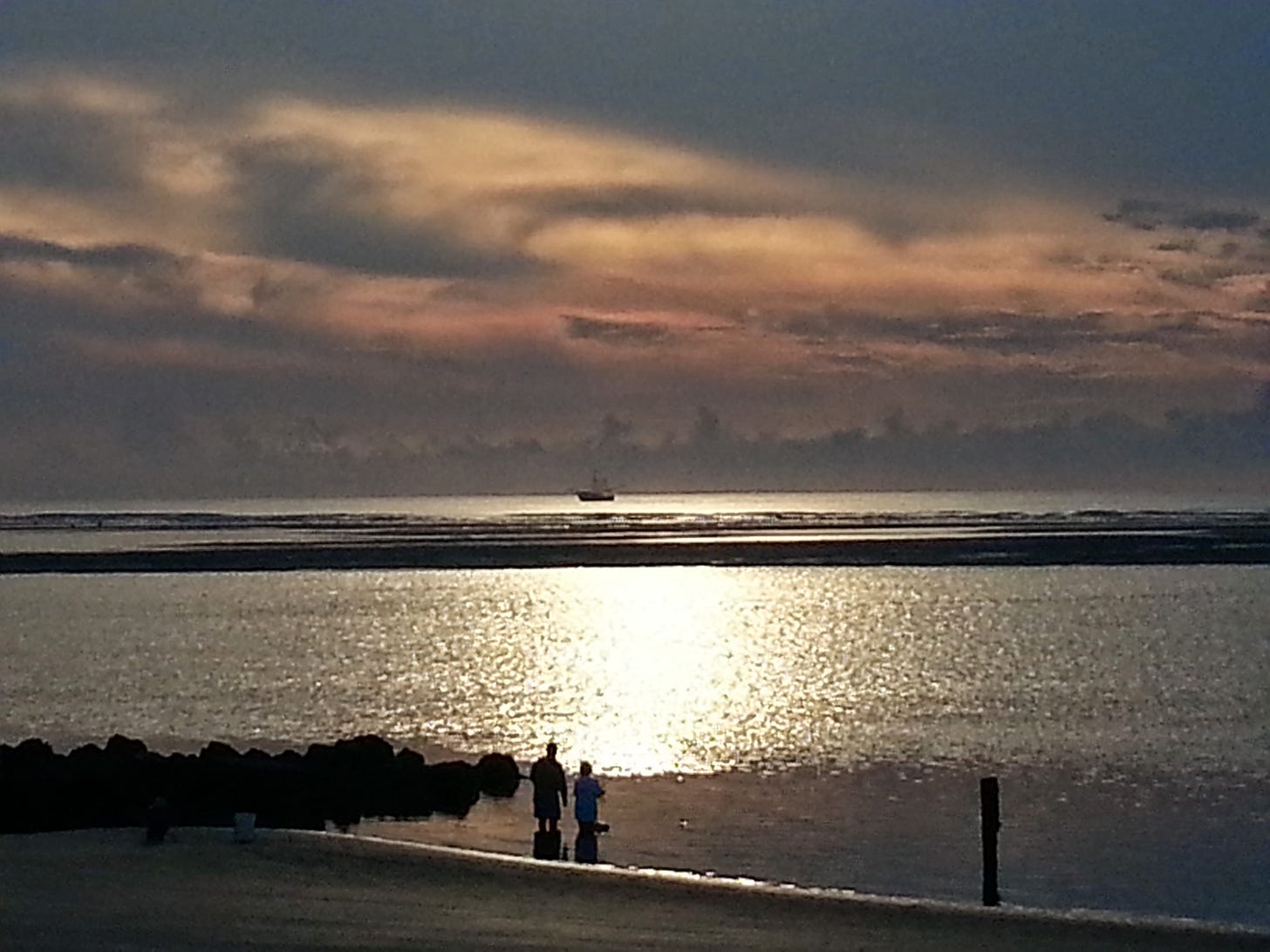
It began there—the sleepless nights and the waiting. Would our flood insurance be enough? Had I put all the important documents on the backup drive? Was our hurricane kit stocked well enough? The questions in my head never stopped. Where could we take the car that was higher should we decide not to leave? Would we really have fish in our pool?
After three years, we were lucky never to have lived through more than a Category 1. Yet the others had come so close, causing wasted nights and stress-filled days. I understood the Key West permanent residents’ need for hurricane parties and the constant reiteration of old Conch stories of past storms. The alcohol and laughter relieved the stress, palpable like an emotional fog across the entire island.
But Key West wasn’t home. It was a place to party, not to raise children. And the claustrophobia got worse with each hurricane season.
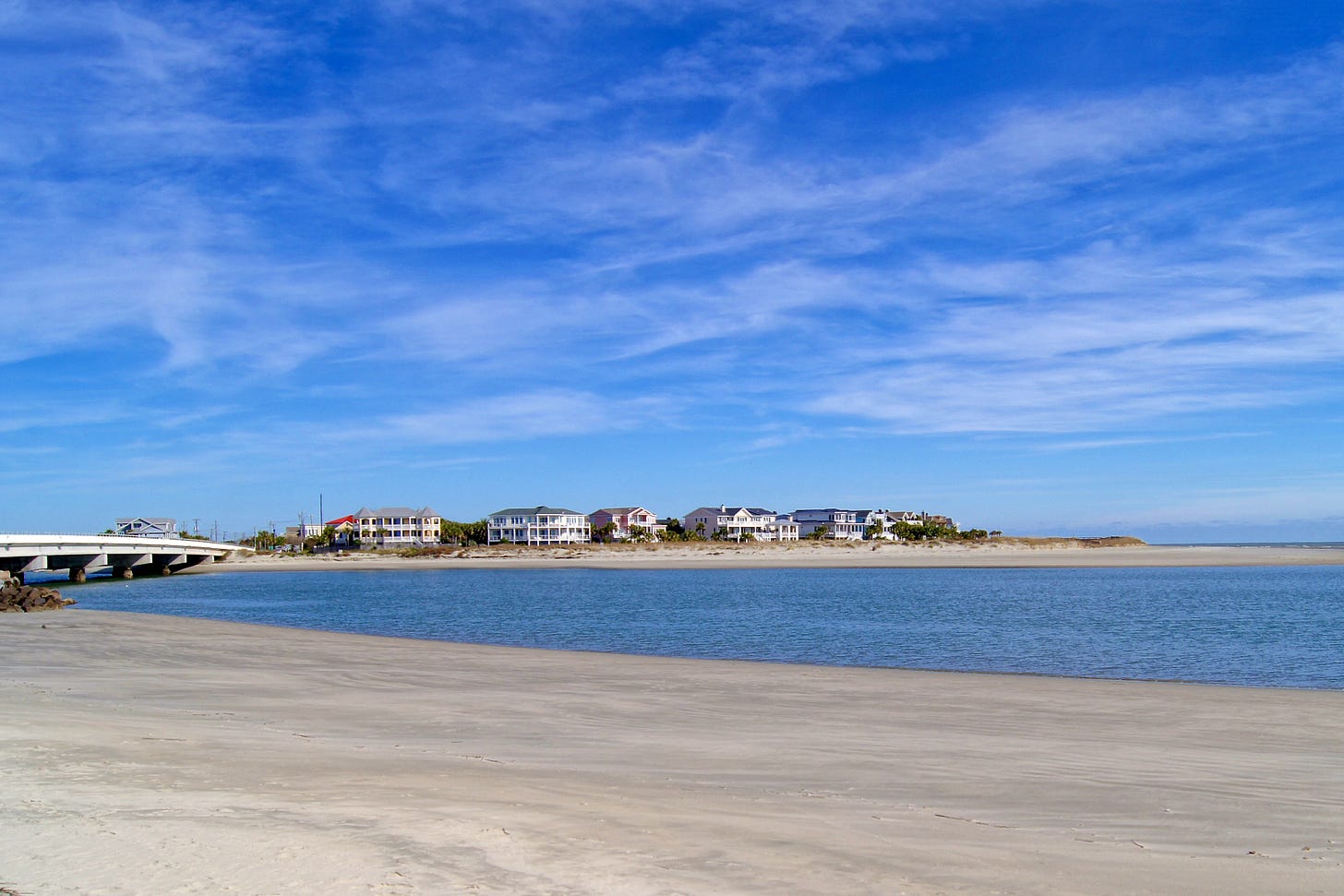
Having made trips as a child to Sullivan’s, Edisto, and Pauley’s Islands in South Carolina, it was an itch under my skin to live right on the sandy beach of my childhood, one niggling to be scratched. And besides, it was a long way from Key West. Wanting the islander closeness without the crazy parties, parades, and naked tourists, I longed for a real place I could call home. A real town. With the right school district for the children. Finally, I persuaded my husband to bid his favorite house goodbye, and we moved to Sullivan’s Island, the Mayberry RFD on the ocean.
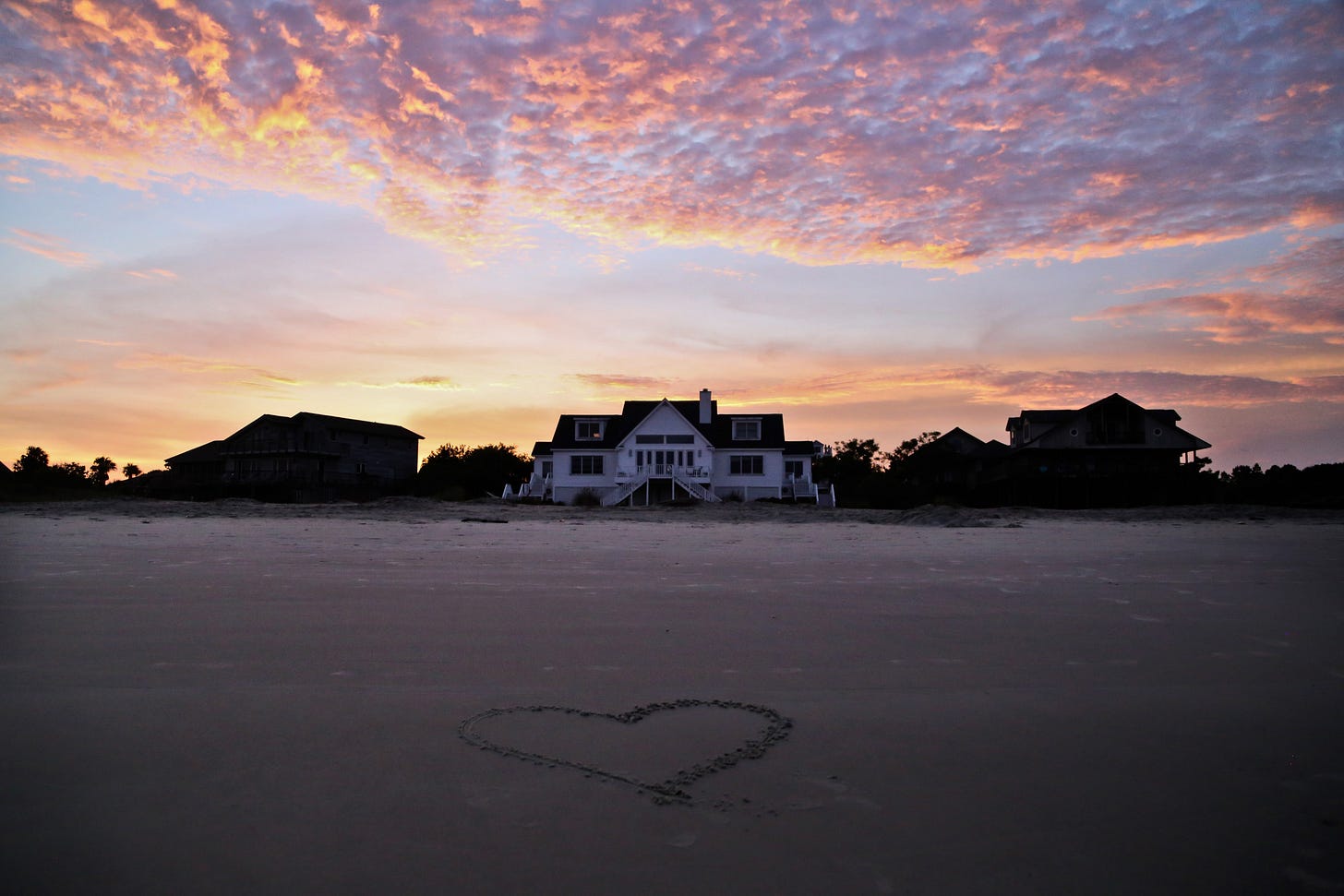
Heaven? Or Did I Need a Reality Check?
I believed I’d found heaven. And from 2013 to 2015 it was. But after five years, three hurricanes, and numerous winter storms offshore that did more damage than any of the hurricanes, the dreams of an idyllic southern town where people love and care for each other burst like children’s soap bubbles. This was Charleston, after all. If you didn’t grow up there, you were “from off” and rarely accepted. The critical looks on the street, the tossing of “bless your heart” the first year when you don’t know any better. The people were almost as traumatic as the weather.
Many of the islanders are close, yet the small barrier island changed. I wanted to keep the quaint little village of wind-worn, wooden-sided houses from my childhood. But by 2015, so many of them were gone, ripped down and replaced by mansions that crowded a half-acre lot. The island became a “good end” and a “bad end,” the difference, of course, being economic status. The new rich hesitated to interact with the long-standing islanders, unaware of the old guard's secret wealth and unable to understand the emotional attachment to the old, collapsing beach houses that stood strong at the water’s edge.
But that isn’t the reason for the disappointment. My expectations were overblown. It was entirely my fault. I saw only what I wanted to see, not the truth. I wanted an oceanside utopia, a place where my family —especially my children —would make lots of friends in the neighborhood—a place I no longer believe exists. Whether I attribute the issues to people who are different than I expected, climate change, or simply Mother Nature, people’s attitudes, ocean storms, and tide changes are a fact of life on the island. I can block out people and choose only the friends who are that—really friends. But I cannot block out Mother Nature.
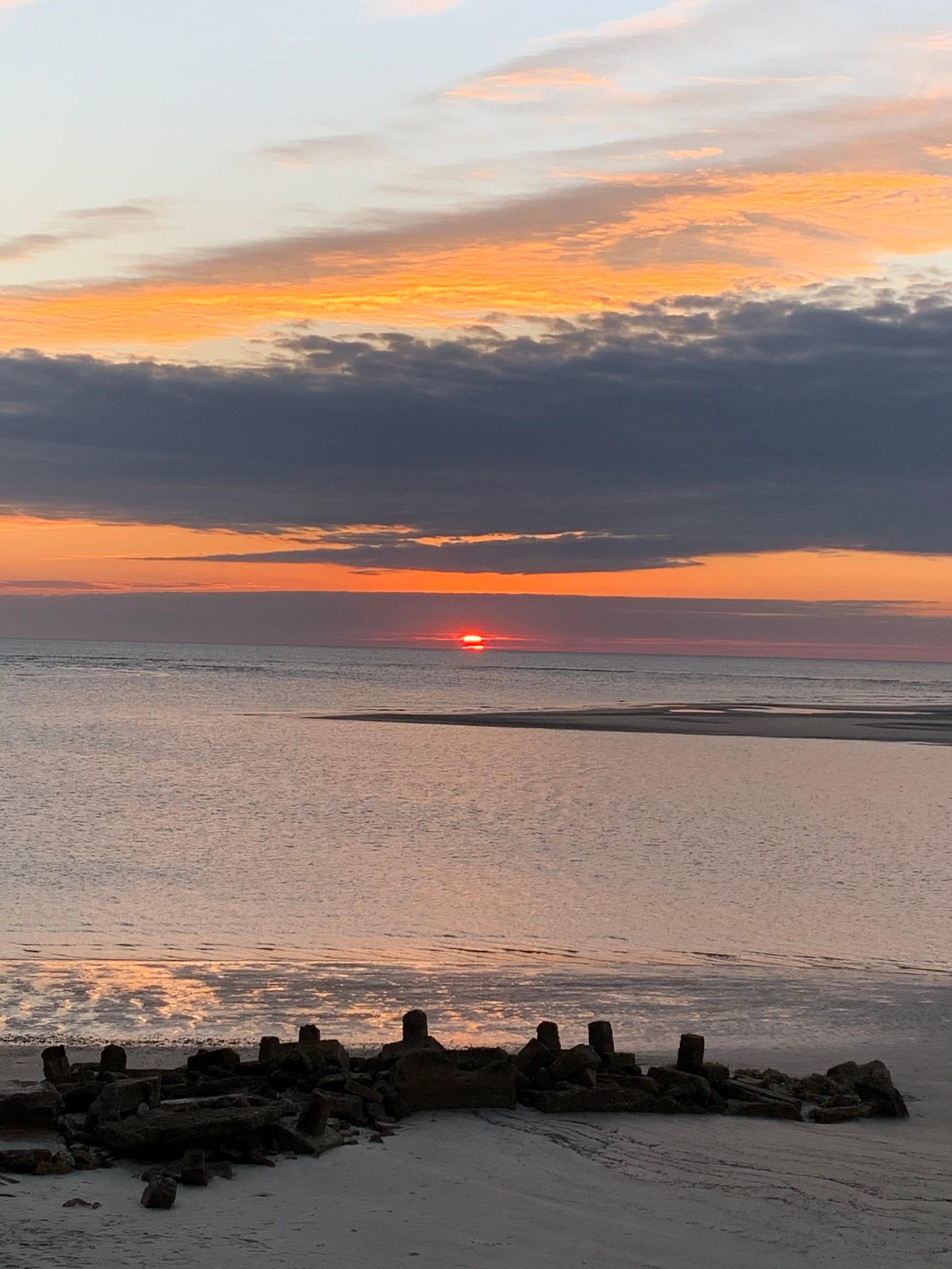
Enough is Enough
We lived on the island for another four years, impatiently, on my part, waiting for the property value increase and the expected return on our investment to make it all worth something in my head. The three years left on the ticking clock until my son graduated could not pass fast enough. He was ready to enter the “real” world, following in the footsteps of his older sister, and I was more than ready to have a life without hurricanes. We benefitted from the schools and basic Southern life where my children grew into polite, intelligent adults. That I cannot discount. Yet during those years, I became one of those I hated, one who lived there to make the money in the end and not build the life I craved.
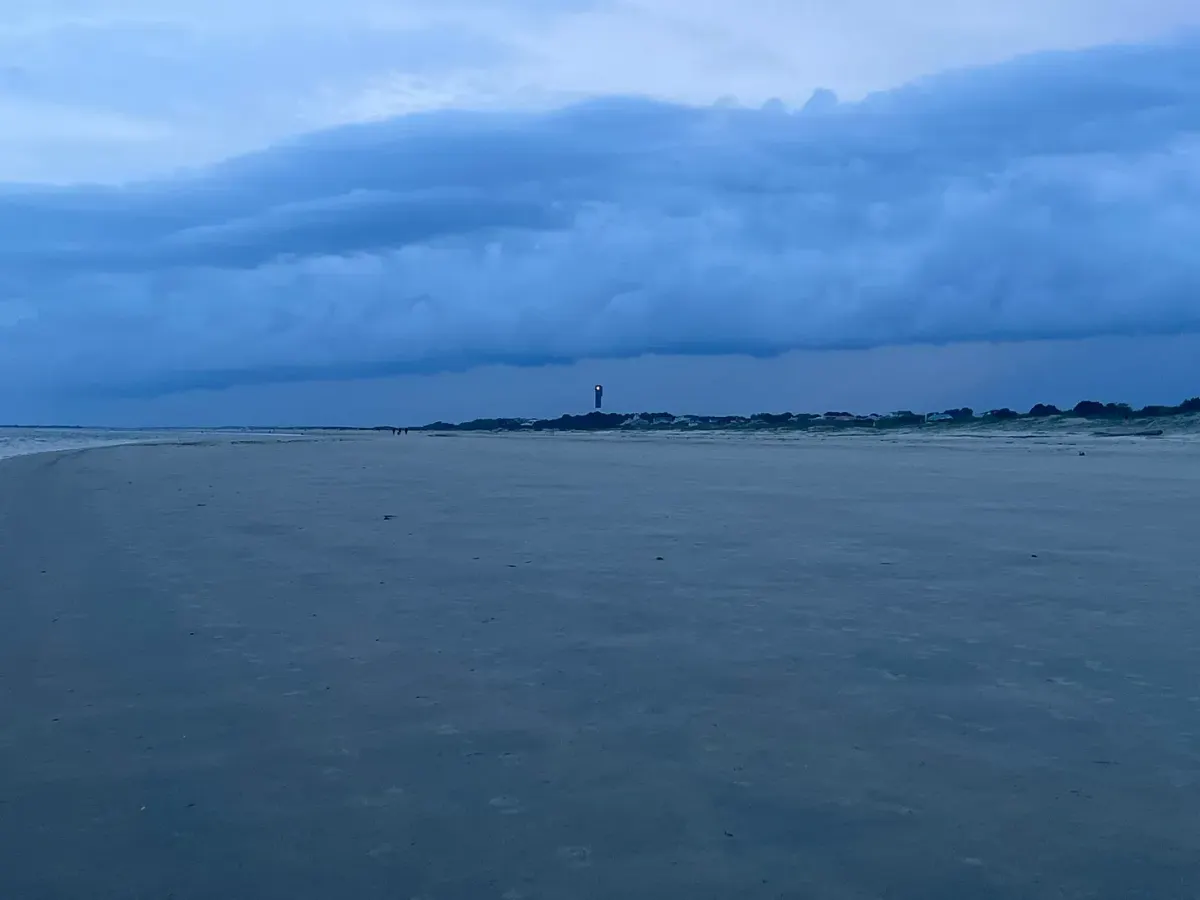
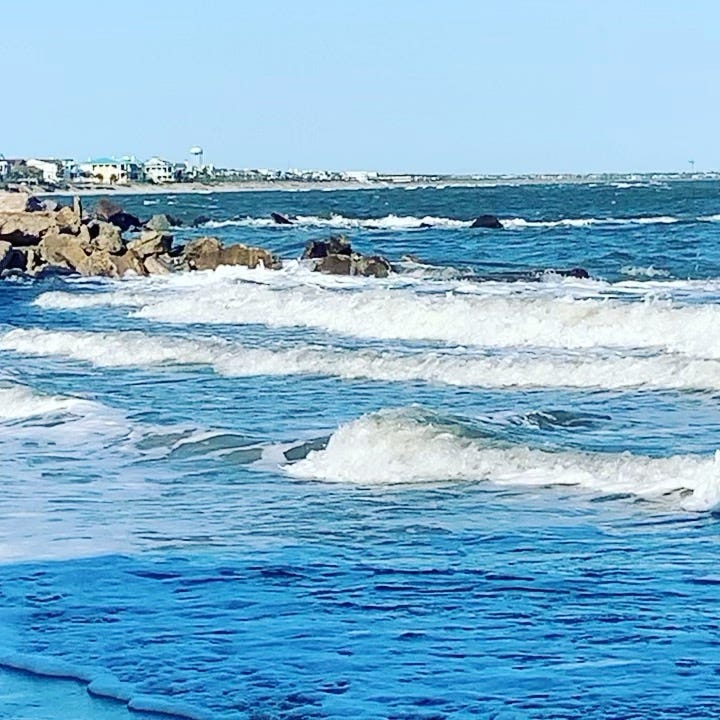
I was ready for a new life somewhere other than on an island that final year. The sound of waves was most disturbing. At high tide they crashed in at the base of our house, and I imagined it collapsing under the weight of all that water. My hard-earned dollars floated away even in my dreams, just like the houses in North Carolina at Rodanthe and Buxton. I wore earplugs at night for the noise and a face mask to block the constant strobe from the lighthouse and the streetlights that never went out.
No longer able to walk the beach for half the year because of the crowds of tourists and dogs that pooped on the sand, I could no longer ignore their owners on telephones, oblivious to the mess their furry children caused. I love dogs, but I could no longer hide my anger at the owners who picked up the poop, tied it in a plastic, non-degradable bag, and dropped it right back on the ground for it to wash up in my yard instead of taking it to the garbage cans on the street. I’d had enough. Beach life, island life, or whatever sticker the locals put on the back of the windshield wasn't real.
When the closing date arrived for the sale of that house, I held my breath, as I had with the hurricanes, hoping everything would go through without catastrophe. I loved the house, the view, and how well my husband had decorated it. But my freedom—from both islands and hurricanes—was much more important.
No more islands for me. It was done. Final. Our furniture was in storage, and I roamed the country for months, searching for a new place to call home and checking my expectations to be sure I didn't make the same mistake again. I searched from New York to New Mexico, even though I was about to live in Hawaii until I remembered it was AN ISLAND.
And then we moved to Miami…
Excedrin anyone?