
What Did I Truly Inherit?
The 23andMe envelope arrived, ordered, interestingly enough, through our Charleston hospital, for free. There were no surprises, as I had already taken the plunge into Ancestry.com and traced my complete heritage on my father’s side in less than 30 minutes.
The 23andMe envelope arrived, ordered, interestingly enough, through our Charleston hospital, for free. There were no surprises, as I had already taken the plunge into Ancestry.com and traced my complete heritage on my father’s side in less than 30 minutes.
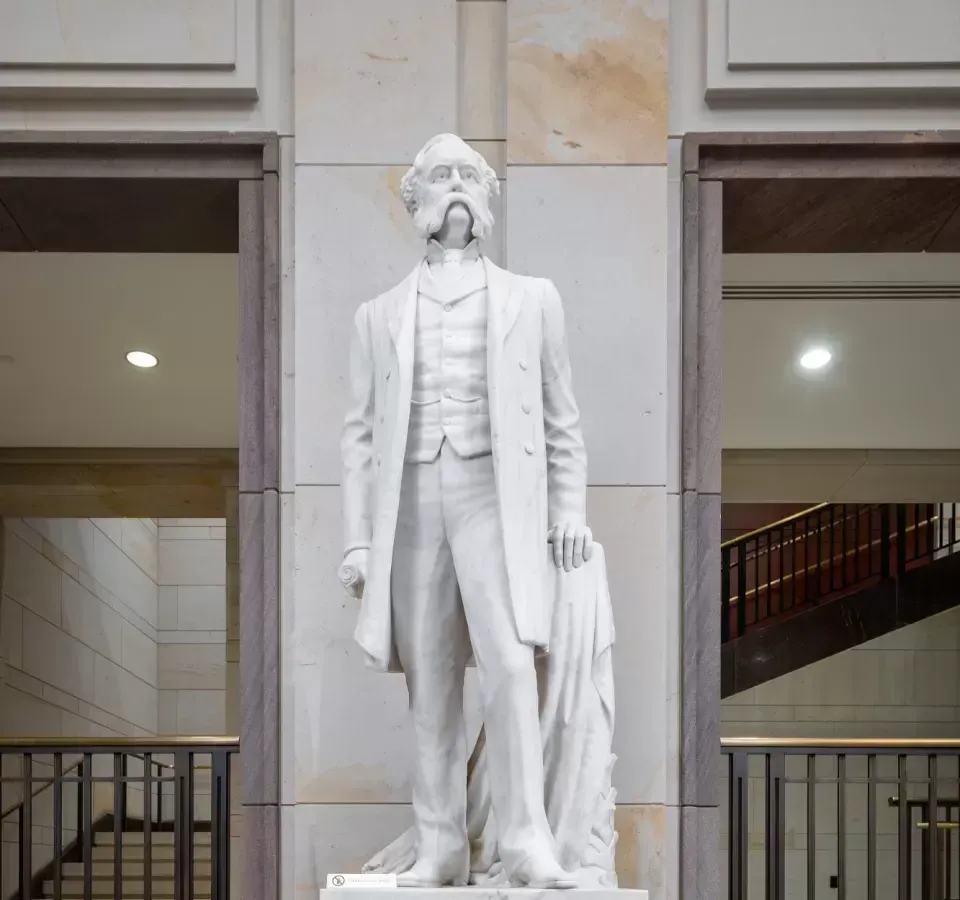
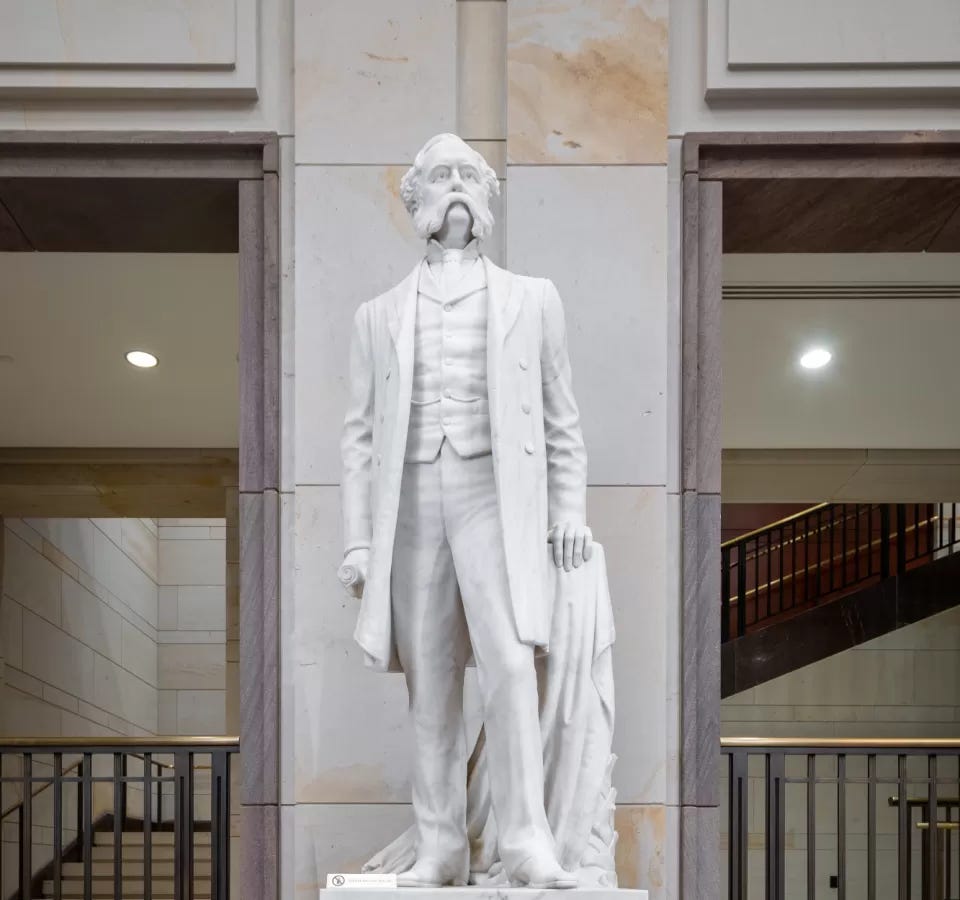
My nose and high forehead are well represented below in the statue of General Wade Hampton at the U. S. Capitol building.
I’m almost one hundred percent northern European, that fact painfully obvious from the blonde hair and not-so-patrician nose. My father’s life began in Tennessee, the product of one of three brothers who sailed from England several hundred years earlier. The history bounces around England with a single foray across the border into Scotland until it peters out sometime not too long after the time of Hadrian’s Wall.
It is as if, according to both data sets, my mother’s side did not exist. I have no record for her family and their black hair, skin that easily tans in summer, bulbous noses, and the assertion that there was a Cherokee squaw as a grandmother somewhere in the mix. The data says that’s a lie.
Yet when I look at my husband’s data, his, of course, as a Turk, is very different, down to the eight percent Ashkanazi Jewish blood that surprised everyone in his family, yet seems to appear in every Turk’s data we’ve talked with. But without a detailed medical understanding of how these percentages are calculated, I am skeptical of both our results. My gut tells me these are false, a marketing gimmick, surprisingly fallen for by my local hospital.
Maybe I feel this way because one half of my existence seems to have disappeared. Nothing in this data represents my mother. Nothing. Yet parts of my mother’s family are written within me. My maternal grandmother’s hateful remarks, for example, the ascerbic wit that cuts to the bone, eventually caused a permanent rift in the family. I can see my grandfather’s ridiculously large ears, ones I’ve kept hidden by my blonde English hair all of my life.
My body shape is my father’s, my face and my skin, yet when I look at my hands as they write this essay, it is my mother’s hands that I see. So without a doubt, I know that the data is wrong. My body proves it, yet it is not important enough to me to hop down the massive rabbit hole to determine the truth.
I have no desire to find out the origins of my maternal truck-farming grandparents, who hinted at prior thieves, bootleggers, and worse. Fodder for great stories, perhaps, but I’d rather not know. Or maybe they made all that up. Maybe they are just a boring bunch, just like zillions of our ancestors, people who trudged through life and then were forgotten.
I’ll take the easy route, the one traceable and sure, overlooking the possibility that a deeper dive might reveal equally despicable characters there as well, such as General Wade Hampton, shown above, a very distant relative and the governor of South Carolina during Reconstruction after the Civil War, and one of the most disgusting slave traders and horrible leaders in the South during this period.
Regardless of what I’ve inherited, I am responsible for what I do with that heritage. And I’d rather move forward than look to the past.